How Modernism Became an Iconic Decorating Style During the 1940s
Table Of Content

Films like A Philadelphia Story, Gilda, and The Big Sleep gave us screen sirens who wore clothes with more command than your average mannequin. Following the liberation of Paris, French designers took back the helms of fashion and steered the decade in a new direction. Once Christian Dior in 1947 showcased an unabashed use of textiles in a wasp-waisted feminine silhouette that recalled the 18th century, the era’s practicality was forgotten. One-story ranch houses quickly became two-stories, like the 1970s-era ranch shown here, because bigger was better. A squared-bay window one might have seen on a Lustron home decades earlier is added to the once-simple ranch design.
Create Your Own Vintage Artwork
Scandinavian furniture with light wood and organic, minimalist lines replaced the heavy, ornate seating of the past. This was due both to modernism's forward-looking aesthetic as well as the optimism of the era. Additionally, minimalist modern furniture could be mass-produced to meet the well-funded middle-class desire to shop. "In an era when you're trying to build a lot of things fast and inexpensively, you need to be as efficient as you can be with your materials," Gatlin says.
Open Floor Plans as an Essential Remodeling Element

Moving beyond aesthetics, it gives attention to the practical aspects of the space. The layouts are designed to cater to your lifestyle, with an emphasis on storage solutions and specific furniture placements. Just like in arabic house interior design, where beauty goes hand in hand with functionality.
Here's What the American Home Looked Like the Year You Were Born - Yahoo! Voices
Here's What the American Home Looked Like the Year You Were Born.
Posted: Mon, 28 Feb 2022 08:00:00 GMT [source]
Key Elements of 1940s Interior Design: Colors, Patterns, and Materials
Designers also used wood, metal, and glass to produce sleek, lightweight pieces like coffee tables and bureaus with simple shapes and tapered legs. "The materials designers were using to make mainstream furniture were much more innovative," Gomez-Lanier says. "The average American was living in a kind of country-style home for much of the decade," Gatlin says.
A drawer cleverly tucked into the bench in the hallway or a bookshelf incorporated into the headboard in your bedroom can not only enhance the visual appeal but also offer practical storage solutions. Color’s use during the 1940s was less about novelty and more of a statement. The iconic Dorothy Draper ⁕began to introduce color into homes, revolutionizing the concept of aesthetics and the way people perceived their living spaces.
The Value of Art and Imagery in a 1940s Inspired Home
The overall look was easy on the eye and created a comfortable and family-orientated atmosphere. To be vintage doesn’t have to mean that all of your belongings and furnishings are hand-me-downs or from yester-year – you can buy new items that resemble the era and create that same homely feel. Creating an inviting room atmosphere in a 1940s inspired home demands for the meticulous curation of art and imagery. Pictures bring in the personal touch, and the artwork can echo the aesthetic themes of the era. Allowing art to take center stage imbues the space with the desired cozy vibe that was iconic to the 1940s. From punchy yellows and deep purples to fiery reds and soothing blues, colors danced together in a radiant spectacle.
With a nod to the outdoors, kitchens featured wood cabinets, butcher-block countertops, and appliances in harvest gold, avocado green, and brown. Terra-cotta tile floors were also popular, and sunken living rooms replaced patios as the place to socialize. In 1955, the USSR announced it was going to launch the first artificial satellite, and the Space Race began. Atomic Age motifs like starbursts and boomerangs appeared on everything, including barware, clocks, lamps, and upholstery. Popular hues included turquoise, coral, pale yellow, mint green, and light blue. "You see pink everywhere, in kitchens, bedrooms, but especially in bathrooms," Gatlin says.
Symbolism in Color: Red, White, and Blue
Most homes built in the late 1940s had two bedrooms and averaged just under 1,000 square feet. At the same time, bold geometric patterns inspired by Cubism, the first abstract style of modern art, showed up in rugs and mosaic-tile floors. Wood floors were laid in angular herringbone, chevron, and parquet patterns, giving them a striking abstract look.
This deck added an extra charm and made the home feel more contemporary while maintaining its historical appeal. When delving into the inspirations that graced 1940s design, some names need to be acknowledged for their indelible impact. Figures such as Winston Churchill, Edward Wormley, Philip Johnson, and Dorothy Draper eclipsed their contemporaries, leaving a legacy that eternalized their design philosophies in the annals of history. Proving steel frames never go out of style, this simple mirror will give your room and extra window on the world. I hope this gives you some inspiration on how to add a touch of 1940s American Traditional style to your home.
Design History Minute: My Night as Dorothy Draper - HuffPost
Design History Minute: My Night as Dorothy Draper.
Posted: Thu, 13 Nov 2014 08:00:00 GMT [source]
In the music scene, Frank Sinatra, Bing Crosby, and Nat King Cole dominated the charts with their jazz and swing hits. On November 20, 1947, Princess Elizabeth of Great Britain married Lieutenant Philip Mountbatten in a Norman Hartnell wedding dress. In 1948 the Academy Awards introduced an award for best costume design, underscoring the role of fashion onscreen.
A small, functional house style suited the British colonists of 1600s New England. As the post-war American middle class grew in the 1950s, regions of the U.S. revisited their colonial roots. Practical Cape Cod houses became a staple in U.S. suburbs — often updated with a more modern siding, like aluminum or asbestos-cement shingles. Some people began to proclaim their individuality with unusual installations of common exterior siding, such as the diagonal siding on the facade of this otherwise commonplace mid-century Cape Cod. Meanwhile, grandmillennial style—a twist on traditional—resurrected mauve, florals, patterned wallpaper, and rich colors. We've gone from the restrained styling of open shelves to houseplant-packed urban jungles courtesy of Hilton Carter.
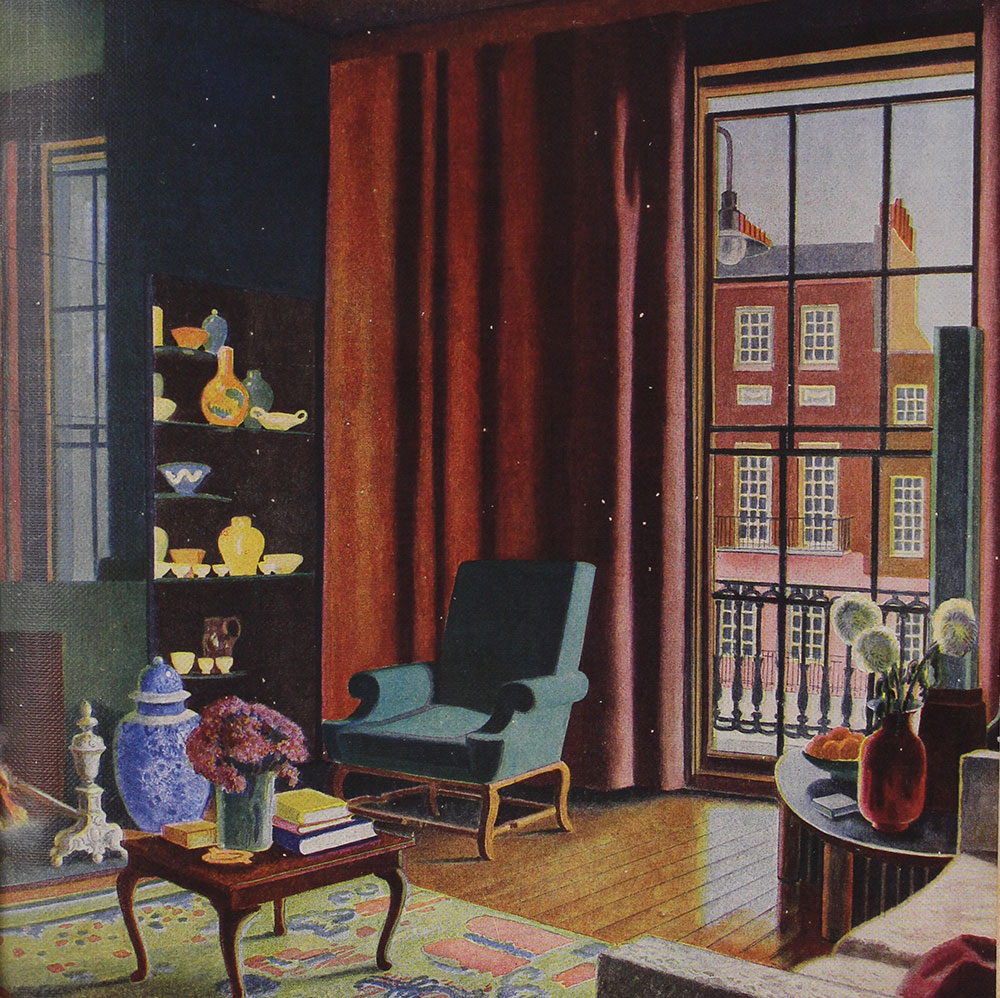
Amid World War II, people turned to their homes as a source of comfort, resulting in a rise in the popularity of luxurious and opulent interiors. But in the post-war period of the 1940s, the USA began to lead, and Europe followed. This led to increased plush furnishings such as velvet sofas, upholstered chairs, and rich colors like deep reds and purples. However, due to rationing during the war, these opulent elements were often scaled back or replaced with more affordable materials. One of the key influences on 1940s interior design was the Art Deco movement, which had emerged in the 1920s but continued to be popular during this period.
One of the most defining features of 1940s interior design is its bold and rich colors, such as deep reds, navy blues, emerald greens, and golden yellows. The key elements of 1940s interior design were bold colors, intricate patterns, and high-quality materials. This era also saw a shift in interior design trends as people sought to create comfortable and practical spaces amidst the chaos of war.
Ohio-made Lustron prefabricated homes resemble one-story Ranch style houses. Although the original steel roofs have long-since been replaced, the two-foot-square panels of porcelain-enameled steel siding is characteristic of Lustron. Colored in one of four pastel shades — maize yellow, dove grey, surf blue, or desert tan — Lustron siding gives these houses their distinctive look. What do an 1885 Victorian in San Francisco, an 1870s Federal townhouse in Manhattan, and an 1840 Greek Revival house in Sag Harbor have in common?
She taught us that color wasn’t just an aspect of design; it was a character, a mood, a soul if you will, within each corner of our residences. Interestingly, many people in the 1940s could not afford the new designs of the time, and the traditional styles of the past remained popular, as well as kitsch-like items, such as flying ducks. Get ready to transport yourself to a bygone era filled with rich colors, luxurious textures, and timeless pieces that will bring an air of nostalgia while adding a touch of modern flair. Instead, a chair made from metal shows off its steel frame in a celebration of the material itself. Against a backdrop of neutrals, bright colors were key, as well as a desire to integrate the indoors with nature.
Yep, minimalism had its beginnings in the age of The Great Gatsby and several icons of modern design, including the Barcelona Chair and Wassily Chair, were created in the 1920s. Bauhaus designers stripped furniture down to its fundamental elements, with everything from tables to teapots reduced to simple geometric forms. Take a decade-by-decade look back at the furniture, colors, and styles that filled our homes over the past century. As an interior designer, I understand the importance of using essential materials to create a specific style for every era. The 1940s home decor is defined by a few characteristic materials that can never be missed.


Comments
Post a Comment